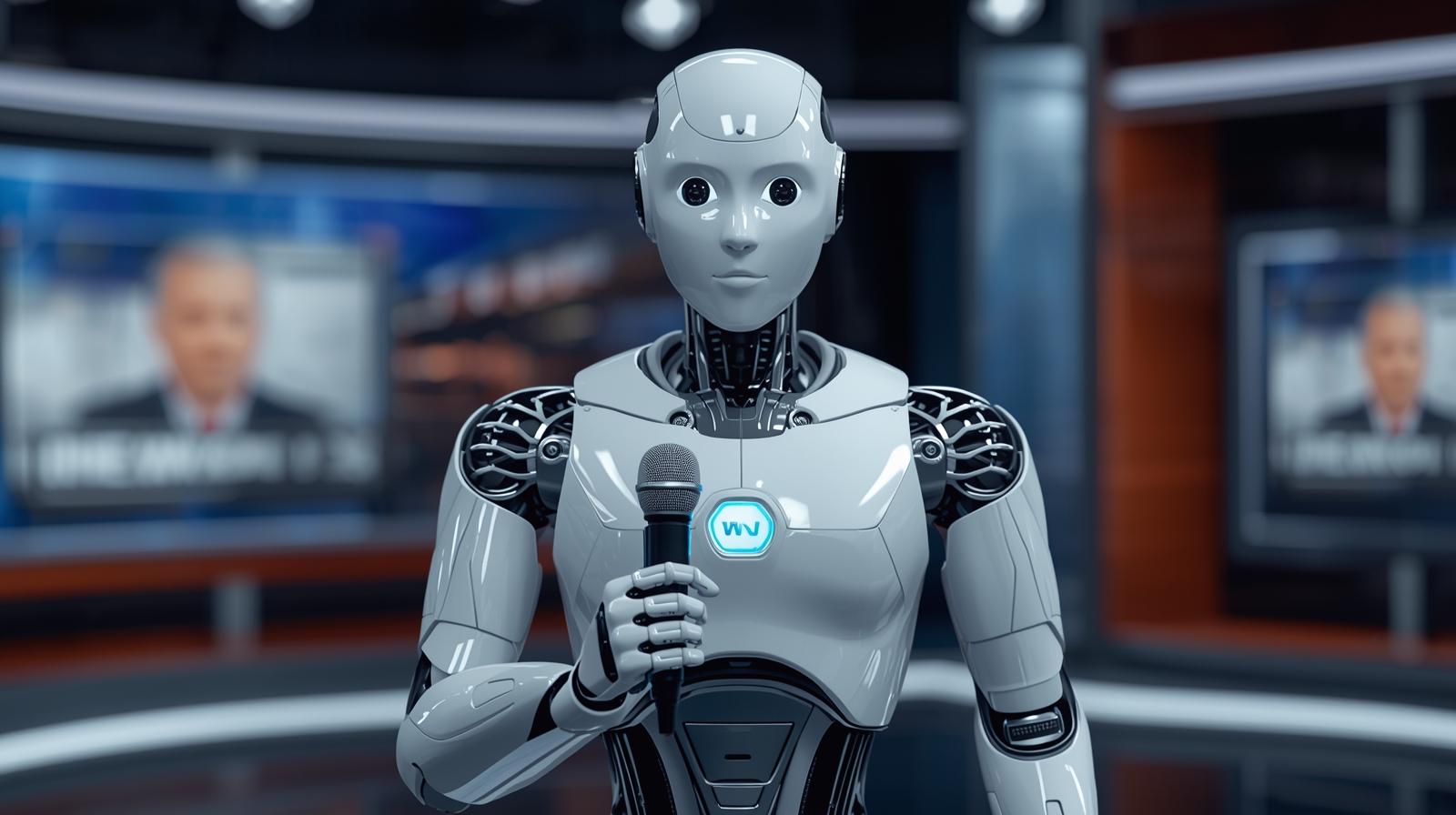
In an era of rapid technological changes, modern media literacy needs to evolve to help individuals critically navigate the blurred boundaries between human and AI-generated content across social media and news platforms. For practical tools and helpful insights on this topic, explore the book
Modern Media Literacy: Generative AI, Social Media, and the News (ISBN: 9798337308722) as a valuable resource for all things media and communications. As the editor of this publication, Dr. Tom Hallaq shares exclusive insights on his professional background and the mission behind his research in this Q&A below. Continue reading to learn more.
Access This Book as Part of Our Full e-Book Collection
Dr. Tom Hallaq Answers Our Questions
What is your professional background that gives you the knowledge needed to lead this publication?
Dr. Tom Hallaq: I am a media literacy researcher and documentary filmmaker and the creator of the Digital Online Media Literacy Assessment (DOMLA), a self-assessment tool used globally to gauge media literacy among students from middle school to university levels. I’ve been studying media literacy for more than two decades.
My professional background includes extensive experience in live television production and direction. I was a key member of the startup news team for KSTU Fox 13 in Salt Lake City, UT where I also produced for the Utah Jazz broadcasts. Additionally, I worked for WDEF-TV, CBS, in Chattanooga, TN as the News Operations Manager, and for KNDU-TV, NBC, in Kennewick, WA.
As an award-winning documentary filmmaker, I focus on issues affecting Kansans. My 2016 documentary, Slow & Low: The Story of the Kansas ag. pilot, highlights the lives of agricultural pilots, formerly known as crop dusters, and received multiple awards, including a Telly Award and an Aegis Award. In 2021, I collaborated with the late Dr. Ian Punnett to produce The Empty Breadbasket: When the land that feeds the nation cannot feed itself, a documentary that explores food access challenges in rural Kansas and celebrates community-driven solutions. This work earned a Silver Telly Award.
I hold a Bachelor of Arts (B.A.) in Communications from Brigham Young University, a Master of Education (M.Ed.) in Instructional Media and Technology from Eastern Washington University, and a Doctor of Education (Ed.D.) in Educational Leadership with a focus on Instructional Methods and Design from Idaho State University, where I was also on the faculty as an Assistant Professor.
Theoretically speaking, I am a constructivist, promoting the idea that learning is most effective when concepts are applied to real-life situations to build new knowledge. My research and creative interests encompass media literacy, media accessibility, and documentary storytelling with an emphasis on food accessibility.
What inspired you to lead this publication?
Dr. Tom Hallaq: I have been invigorated by research into artificial intelligence and the impact it is having and will have on media. AI is a powerful tool that is weaving its way into every aspect of life. As with any powerful tool, it has potential for both great good and great harm. Through media literacy education, we can be better informed and, therefore, better prepared to navigate the influence and consequences of AI and its role in media. I want to be a part of this.
What is your mission for this title?
Dr. Tom Hallaq: As an early contributor in the AI media literacy space, the research in this book will be a foundational source of information for other researchers. I hope to see other media literacy researchers look to this book for core knowledge as they investigate other paths of AI’s influence on media literacy across the globe.
How is your research going to impact your field of study and how does it relate to current trends and social matters?
Dr. Tom Hallaq: Artificial Intelligence is so new that we don’t completely understand its impact on society yet. But we do know that impact will be great – similar to how the internet has changed our lives for the past quarter century. Just like we didn’t fully grasp the internet’s impact at first, it will take time to fully understand how AI will change our lives. We’ve already seen AI adopted on a wide scale by many industries. We now need to begin understanding the repercussions – for good or for bad – and how to deal with those repercussions.
In what ways does your book distinguish itself from other scholarly works in this field by embodying the concept of "Publishing Tomorrow's Research Today?"
Dr. Tom Hallaq: Through its timely and innovative focus on the challenges presented by the Generative AI revolution, Modern Media Literacy: Generative AI, Social Media, and the News examines how today’s Generative AI transformation reshapes media literacy, confronting the realities of artificial intelligence and disinformation in our digital world. The book explores the often-overlooked challenge of living in a mediated world defined by social engagement and constant message saturation. Focusing on the dynamic intersection of AI, social media, and journalism, the publication offers an essential framework for understanding today’s evolving technological landscape—especially as it shapes the experiences of digitally immersed youth.
Who is the book intended for? Who ultimately will benefit from this title?
Dr. Tom Hallaq:The primary audience for this book is media literacy researchers, educators, and students – those with an academic focus on artificial intelligence within the context of media literacy. It is hoped that this book will serve as a foundational source of research on the topic that can be looked to as an early, credible source of information to be built upon by others.
What do you want people to know about your book before they read it?
Dr. Tom Hallaq: This book is intended as a resource. It’s not likely to be read cover-to-cover by the broad audience, but something that can be used in researching early knowledge about AI through the lens of media literacy. But there’s a ton of great information inside. The chapter authors have done some very insightful research that comes from across the globe – Germany, Italy, India, and of course, the U.S. It’s interesting to read about the commonalities and the differences each region brings to the topic.
How does your publication stand out from others like it?
Dr. Tom Hallaq: Modern Media Literacy: Generative AI, Social Media, and the News is an early contribution to the body of knowledge on this topic. As such, it is hoped that it will be looked to as a primary source for future research. As AI and media literacy continue to develop, our understanding will also increase. Therefore, it is possible that some of the predictions made in this collection may prove to be incorrect. I think that’s ok so long as the research is sound. Regardless, because of its early entry, the works found here will be key in progressing this area of research.
What are some future directions for your research?
Dr. Tom Hallaq: Because of my journalistic background, I am interested in investigating how AI is influencing our news sources. We know the capabilities of AI are strong, and we know that human oversight remains important. But I want to learn more about how extensively AI is used within our news outlets and what the effect will be on information access for audiences and journalists alike.
What are other topic areas that your readership would find of interest?
Dr. Tom Hallaq: Media literacy is a broad topic – ranging from addressing the digital divide to the influence of news and social media on our youth. I believe that AI will be a part of all of this. So, there are several topic areas that will be of interest to this book’s audience. There is a chapter addressing the general history of media literacy as well as a chapter on legal concerns. Other sections in the book address the generational concerns relating to AI and media literacy. So, there’s a lot in there that will allow many researchers to branch off from these chapters into new research topics.
Tell us about your experience with IGI Global Scientific Publishing.
Dr. Tom Hallaq: IGI Global Scientific Publishing has been very helpful in guiding this publication process. This was my first time editing a book. Because of IGI Global Scientific Publishing’s clear instructions and constant support, the process was smooth. As editors, we wanted to do something out of the ordinary – because of the topic of Artificial Intelligence – we wanted to use a cover largely designed through AI. Through a collaboration with the IGI Global Scientific Publishing team, we were able to use an AI-generated cover image for the book while still abiding to copyright laws. After the publication was released, we received a lot of follow-ups from various departments. Everyone has been reachable and cooperative.
About the Editor
Tom Hallaq is a media literacy researcher and documentary filmmaker. He is the creator of the Digital Online Media Literacy Assessment (DOMLA), a self-assessment tool employed globally to gauge media literacy among students from middle school to university levels. He currently serves as an associate professor on the faculty of the A.Q. Miller School of Media and Communication at Kansas State University. Dr. Hallaq's professional background includes extensive experience in live television production and direction. He began his career as a key member of the startup news team for KSTU Fox 13 in Salt Lake City, UT. Additionally, he has worked as a News Operations Manager for WDEF-TV, CBS, in Chattanooga, TN, and for KNDU-TV, NBC, in Kennewick, WA. As an award-winning documentary filmmaker, Dr. Hallaq focuses on issues affecting Kansans. His 2016 documentary, Slow & Low: The story of the Kansas ag. pilot, highlights the lives of agricultural pilots, formerly known as crop dusters, and received multiple awards, including a Telly Award and an Aegis Award. In 2021, he collaborated with the late Dr. Ian Punnett to produce , a documentary that explores food access challenges in rural Kansas and celebrates community-driven solutions. This work earned a Silver Telly Award. Dr. Hallaq holds a Bachelor of Arts (B.A.) in Communications from Brigham Young University, a Master of Education (M.Ed.) in Instructional Media and Technology from Eastern Washington University and a Doctor of Education (Ed.D.) in Educational Leadership with a focus on Instructional Methods and Design from Idaho State University where he was also on the faculty as an Assistant Professor. Theoretically speaking, Dr. Hallaq is a constructivist, promoting the idea that learning is most effective when concepts are applied to real-life situations to build new knowledge. His research and creative interests encompass media literacy, media accessibility, and documentary storytelling.
Disclaimer: The opinions expressed in this article are the author’s own and do not reflect the views of IGI Global Scientific Publishing.